
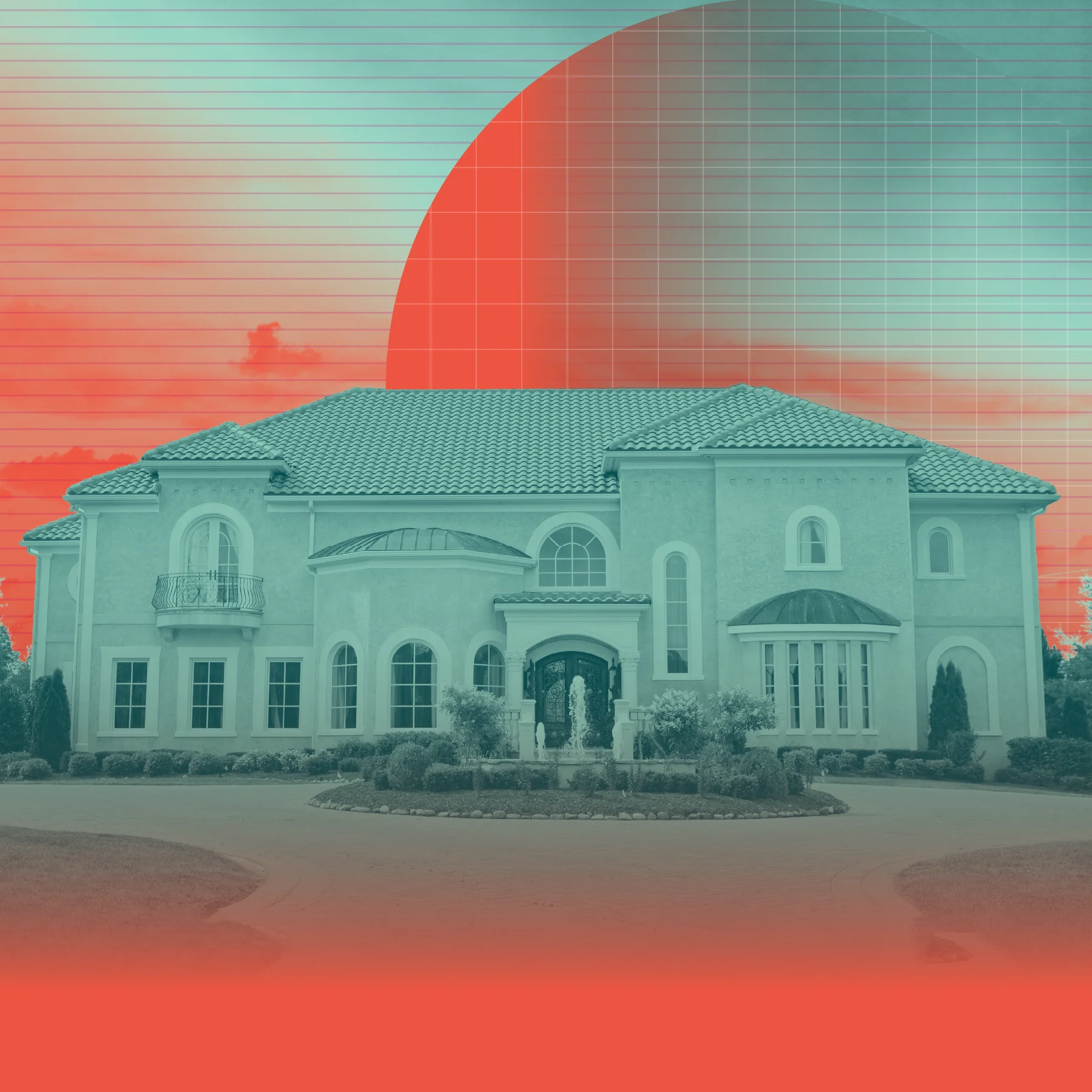
Taxing property sales over $5 million to fund affordable housing in one of the most expensive real estate markets in the US might have seemed like a simple solution. The reality has been far more complex.
In Los Angeles, a “mansion tax” designed to address an acute housing shortage inadvertently deterred property owners from selling, chilling the market. The policy, which hit high-value commercial properties hardest, ultimately slowed the growth of the city’s regular property tax revenue, says research by Harvard Business School’s Daniel W. Green.
Sales that would have happened absent the mansion tax don't happen, which means reassessments that would have brought in more property tax revenue don't happen.
The Measure ULA law, which took effect in 2023, prompted both residential and business property owners to hold onto their high-value real estate, causing sales of properties worth more than $5 million to fall by 38%. As a result, the city is expected to see future property tax revenue losses that wipe out at least 63% of mansion tax gains, potentially erasing them altogether, Green says.
“Sales that would have happened absent the mansion tax don't happen, which means reassessments that would have brought in more property tax revenue don't happen,” says Green, an assistant professor. Under California’s system, municipalities can only significantly raise taxable assessed values of properties when they change hands.
With real estate transactions already depressed by high interest rates, similar policies in other cities risk freezing high-value assets, curbing new investment, and shrinking tax revenue, Green says. Plus, any extra taxes a city imposes, especially on businesses, could force firms to rethink their location and exit strategies.
Green cowrote the working paper “Fiscal Externalities of Transaction Taxes: Evidence from the Los Angeles Mansion Tax,” released in June, with Jack Liebersohn and Tejaswi Velayudhan, assistant professors at the University of California, Irvine, and Vikram Jambulapati, lecturer at UC San Diego.
We discussed the implications of the findings with Green and Liebersohn in a conversation edited for length and clarity. Here’s what we learned.
Taxes can undermine other revenue sources
Green: There are two ways to think about how governments finance themselves. One way to think about it is that they collect money from various things. They can charge money for licenses, taxes, and various fees. Once they have that money, then they allocate the money.
And another way is to create a new tax and use the new tax to fund a new project. That's what happened in this case. There's a housing initiative that’s going to be funded by the mansion tax.
It's important to understand that no one is debating that the mansion tax did generate revenue. That revenue is being used to fund new programs. But it's also reducing revenue collected by existing property taxes. Economists call this a fiscal externality: one tax shrinks the base of another tax.
It’s important for policymakers to understand when they design taxes to look at not just whether they fund the narrow program the tax was for, but to consider the effect on the rest of the budget.
Mansion taxes have become a popular alternative
Liebersohn: Property prices and housing affordability have become worse in recent years, and cities throughout the country are trying to find new and creative ways to make housing more affordable. The idea of the LA proposal is to basically tax the rich to fund housing for the poor. That's a very noble idea, but our question was how well that worked in practice.
Property taxes are really unpopular. A lot of cities and states are trying to find alternatives because people are worried that older folks who've lived there for a long time have a highly priced home, but might not have a lot of money in their bank accounts.
An increasingly popular alternative is a “mansion tax”—a one-time transfer tax paid when a high-value property sells. In California, Proposition 13 limits how fast a property’s taxable assessed value can rise between sales, generally no more than 2% per year, even if market values rise much faster. That makes it difficult for cities to raise additional revenue through the regular property tax, so policymakers look to transfer taxes like Measure ULA, which apply at the point of sale and aren’t constrained by that assessment-growth cap.
Given that many other places are considering laws like this, this seemed like a good opportunity to study its effects and hopefully help policymakers and the general public elsewhere.
Robust property sales stoke long-term revenue
Liebersohn: Let's say that you're a small landlord, and you own a 10-unit apartment building in Los Angeles. Your family has owned it for 30 or 40 years. That means that the last time the value was fully reassessed by the government was four decades ago. That means taxable assessed values have gone up by only about 2% a year ever since then, even though the housing market has gone up by a lot more, maybe 5% or 6% a year.
As of today, the tax assessment might only be a quarter of its true market value. Right now, if you decide to sell it, the tax assessment will quadruple. And going forward, the city is going to collect four times the property tax on that property every single year.
Enter the mansion tax, which charges 4% of the sale price, or 5.5% if it's above $10 million. If that discourages you from selling the property, not only do you decide not to sell it, but the government won't benefit from that stepped-up tax assessment in all future years, and instead will collect taxes on the lower tax assessment that you have sort of grandfathered in.
The Los Angeles region offers a case study
Green: If we want to understand the impact of a policy, just like a scientist doing an experiment in the lab, you'd like to keep everything else equal in your experiment. And because LA is sprawling and the border of the city is somewhat arbitrary, it’s a nice quasi-experimental setting.
In addition to the revenue effects of this tax, it's also preventing changes in land use.
The places affected by the tax are really very similar to places not affected by the tax. People who aren't familiar with California might not realize how much what we think of as Los Angeles is actually not in the city. It might be places like Glendale or West Hollywood, which are their own cities. A lot of Los Angeles is unincorporated LA County. These are places that have iconic LA sites, apartment buildings, and so on.
The tax only applied to the city itself. So we can compare very similar places that are affected and unaffected, where the interest rates are the same, the population is the same, and so on.
Taxing commercial properties can thwart new opportunities
Liebersohn: One straightforward [policy adjustment] might be exempting apartment buildings and other commercial properties. It's called a mansion tax, but it applies to apartment buildings. In fact, roughly half of Measure ULA revenue comes from commercial property, much of it apartment buildings.
Green: One concern we haven't talked about is: What happens when someone doesn't sell a property? Usually changes in use of property coincide with sales. There’s a new owner who will do something different, or a building might be falling into disrepair, or there might be a new use that's better for the community.
In addition to the revenue effects of this tax, it's also preventing changes in land use. In that sense, a commercial exemption could be a potentially important change. Because if it was designed to target mansions, to tax the rich, preventing someone from selling to redevelop an apartment building is not really consistent with that goal.
It is called the mansion tax. So people probably had a certain image in their heads when they pulled the lever to vote.
Image created with asset from AdobeStock/nadl2022
Have feedback for us?
Fiscal Externalities of Transaction Taxes: Evidence from the Los Angeles Mansion Tax
Green, Daniel, Vikram Jambulapati, Jack Liebersohn, and Tejaswi Velayudhan. "Fiscal Externalities of Transaction Taxes: Evidence from the Los Angeles Mansion Tax." SSRN Working Paper Series, No. 5273034, June 2025.