
It’s hard to track the AI talent bouncing among OpenAI, Meta, Anthropic, and an array of incumbents and startups willing to pay hundreds of millions of dollars in compensation to gain advantage.
The right recruits might bring not only artificial intelligence expertise, but also access to valuable competitor insights. A headline-making hire can also signal to investors that a company is doing everything it can to compete.
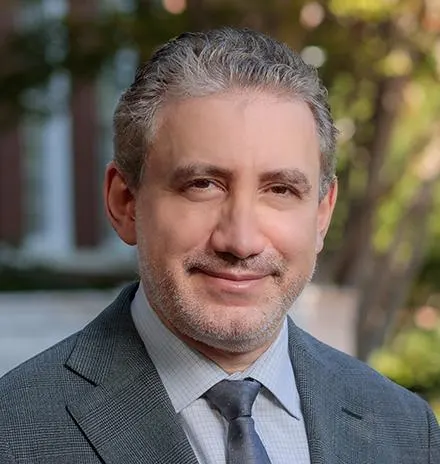
In the end, hiring top AI talent is easy; leveraging their knowledge to its fullest potential is harder, says Harvard Business School Professor Boris Groysberg. While Meta’s $14.8 billion investment in Scale AI enabled the company to tap prodigy Alexandr Wang, news reports of integration challenges and executive defections at the Facebook parent abound.
There’s still an attitude of ‘Let me get the great people, and they’re going to evolve and merge into a team.’
“There’s still an attitude of ‘Let me get the great people, and they’re going to evolve and merge into a team,’” says Groysberg, the Richard P. Chapman Professor of Business Administration. “I think we all know that that does not happen.”
We talked to Groysberg, coauthor of the August case study “Meta and the Superintelligence Talent Race,” about the AI talent wars. Here’s what we learned.
1. Talent density matters even more now
“AI has basically made some organizations with fewer people just so much more productive. And now we have better tools for measuring talent, so there’s a lot more focus than there was before.
One measure is talent density—the number of talented people divided by the number of employees. If you have 100 talented people among a thousand employees, that's 10%. Some organizations look at their talent density year by year, and you hope to see that number going up or at least not declining.
Another measure that's similar is what I call talent density in critical jobs. Every job is important, but not every job is critical. There are some jobs that are really important to your competitive advantage.
Let’s assume you have 50 critical jobs. How many of these people are talents? If you have 40 out of 50, that's 80%. Some companies have five out of 50. That's 10% and that's a problem."
2. Talent acquisition alone isn’t enough
“When I think about talent acquisition, there are three ways to do it:
You can hire individual talents and hope they become a team.
You can buy a firm. Then, the challenge is integration. But even if for a startup with 100 people, when you talk to CEOs making those transactions, they’re really going after six or seven people.
There’s an approach in the middle: the lift-out. That’s the acquisition of teams.
Each of those categories have challenges and opportunities. So, for example, Meta has hired so many capable people and spends so much time figuring out who they are. I think [Meta CEO Mark] Zuckerberg spent months with Alex before he gave Alex an offer.
[Alex and top AI researchers they hired] all sit together, but I wonder whether they're spending enough time figuring out how to make all these capable people act as a team.
You have to be intentional in team design. You have to be intentional in a team launch. You have to be intentional in team processes. You have to be intentional in creating a sort of team chemistry.”
3. Success at one company doesn’t guarantee success at another
“In Silicon Valley, there’s a belief that you can take talented people from one place, move them to another, and they will continue to be great. And I think we're going to see what we have seen everywhere—whether it's law firms or investment banks— is that, on average, they will not be as successful.
OpenAI is not Facebook. Amazon is not Facebook. They have different cultures and ways of working.”
4. Lift-outs don’t eliminate integration issues
“Some CEOs try to solve integration issues by hiring teams through a lift-out. If you look at our research, we find that stars that move with their teams do well, but this still doesn’t eliminate the integration challenge.
When you unplug the relationship that made a team successful and take it someplace else, is the talent more portable than if you go by yourself? The answer is yes. My two colleagues, Ashish Nanda and Nitin Nohria, and I documented it about 20 years ago in the Risky Business of Hiring Stars HBR. But companies need to think of the team as a mini-acquisition. You have to be able to integrate them.
If they come as a team and you keep them as an island in the middle of the ocean, in five years they will leave as a team.”
5. Hiring AI talent can seem like an insurance policy
“When you now tell people that you're hiring AI talent, nobody's arguing that you shouldn’t be. And I think if at the end of the day, you're not successful, it's also a little bit like an insurance policy.
If you develop your own AI talent and they don't succeed, people will look at you and say, ‘You should have gotten the best and brightest. You should have gone for stars.’ But if you hire star talent and it still didn’t work, it shows that ‘We did our best. We found the best people. We brought them in. We gave them resources. And it did not work.’”
6. With AI, companies will likely shrink
“In one of my classes, one of the MBAs asked me if I believed that organizations are going to become smaller, which is what a lot of people believe. Because if you have talent and you have AI, you don't really need 5,000 employees.
They asked if I thought that companies would become a N of one (in other words, run by one person). I told him that I’m not sure because if you have four or five people who are really different but complementary, then one plus one can equal three.
But will we see organizations that are smaller? I think the answer is absolutely yes.”
7. AI can help fill skills gaps—fast
“AI can help us diagnose what skills we have as individuals, as well as the skills that an organization has. It can help us measure it better and connect it to strategy.
Companies can ask [an AI tool]:
What jobs do we need?
What roles do we need?
What skills am I missing?
We can do this in a much more rigorous way than I have seen anybody do it before.
And then AI can help you skill up. That’s what I find most fascinating about AI. I see a number of individuals and companies using AI for that.
AI can help you figure out how to get better, but you still have to be able to use those skills, and to understand when to use them to achieve a specific outcome.
Even just 10 or 15 years ago, if you wanted to develop a particular skill, you would have to wait for a class or training to be offered. Many companies used to say, ‘If you become a manager, we will teach you the skills.’ Then they would set out to bring everyone together in February. But if you were promoted in May, you would have to wait and it would be a disaster. Now, if you get promoted in on May 1, you can be learning skills on May 2.”
8. AI can scale up mistakes
“We have to accept what AI is capable of doing in 2025, and not capable of doing 2025.
I was talking to an executive, a person in charge of a number of coders. He said ‘Look, if you take a star coder, AI makes that person 10x. And if you have a really bad coder , maybe it’s negative 7x.’
But AI can scale your mistakes, too. We have seen this. You have to be careful.
People often wonder ‘Is AI good? Is AI bad? Can AI do everything? Can it do nothing?’ Everything in the world is about nuance. It’s about asking under what conditions can AI help you do something. If we operate with that level of nuance, AI could be a tremendous technology.”
9. People still need soft skills and experience
“Many [soft] skills will still be in demand. I was recently teaching about leading change, and we talked about the importance of influencing skills and the ability to influence without authority.
AI can help you figure out how to get better, but you still have to be able to use those skills, and to understand when to use them to achieve a specific outcome.
The way I think about it is: AI will give you the alphabet, but you still need to write a poem. It can teach you the alphabet really fast, and it might give you the first draft of a poem.
But to become a really great executive—to go from average to great—that gap is so big. Successful executives have soft skills that have been acquired over time, have been practiced over time, have been sharpened over time through mistakes, failures, and successes. I think a lot of those things will not go away.”
Photo credit: Russ Campbell